I also thought that these were the same. After that, I realized they were similar but not exactly the same. Well, now I am sharing my knowledge about their key differences, such as how to write a personal statement and statement of purpose (SOP). Plus their dos and don’ts, and many more things. With one sentence, here I will cover everything about a Personal Statement and Statement of Purpose (SOP). Let me break this down individually so you can understand how to write a good personal statement. Let’s start with-
Personal Statement vs. Statement of Purpose: Key Differences
| Aspect | Personal Statement | Statement of Purpose (SOP) |
| What It Is | A personal essay showing who you are, your experiences, and your goals. | A focused statement showing your academic/professional journey. |
| Main Purpose | To share your personal story, motivations, and why you’re applying. | To show why you’re a good fit for a specific graduate program. |
| Focus | Highlight your personal growth, hobbies, and life outside academics. | Emphasizes academics, research, and career goals. |
| Length | Usually shorter, around 500-650 words. | Typically longer, around 500-1000 words (1-2 pages). |
| Structure | More like a story about your life. | More formal with sections about your background and goals. |
| Tone | Casual, personal, and reflective. | Formal, academic, and goal-oriented. |
| Examples | Life events, hobbies, challenges you’ve overcome. | Research, academic work, internships, or career experiences. |
| Relevance | Shows your overall growth, not always related to your chosen program. | Connect your experience directly to the program you’re applying to. |
| Audience | For undergraduate admissions—looking for well-rounded applicants. | For graduate admissions—focused on success in a specific field. |
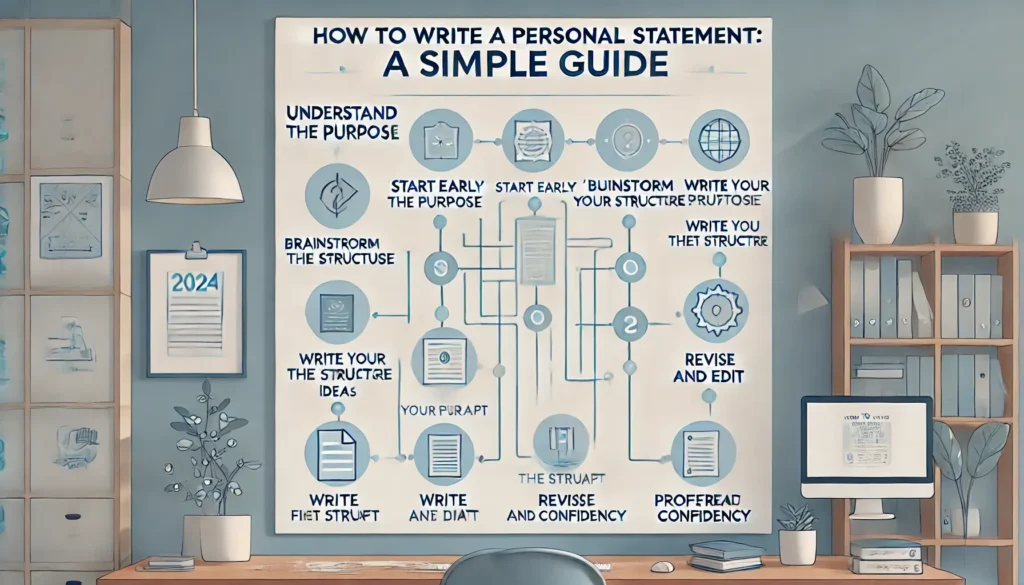
How to Write a Personal Statement: A Simple Step By Step Guide
Let’s start with the Personal Statement. I keep this simple and break it down step by step for better understanding and writing a statement of purpose in sample format. This writing is a crucial part of the university and scholarship application process. It allows you to showcase your personality, achievements, and motivations. Have a look at these steps-
Step 1: Understand the Purpose
Your personal statement shows who you are beyond grades. It should explain why you’re applying, what experiences have shaped you, and your future goals.
Step 2: Start Early
Begin writing well before the deadline. This gives you time to think, draft, revise, and get feedback.
Step 3: Brainstorm Ideas
Before writing, Ask yourself:
- Why this course?
- What excites you about it?
- What relevant experiences have you had?
- What skills make you a good fit?
- What are your career goals?
Step 4: Outline Your Structure
- Introduction: Start with a strong hook. Introduce yourself and your motivation.
- Academic Background: Talk about your education and relevant experiences.
- Professional Experience: Mention internships, jobs, or volunteer work.
- Extracurricular Activities: Highlight clubs, sports, or community service.
- Future Goals: Explain your career plans and how the program will help.
- Conclusion: Summarize your enthusiasm and suitability.
Step 5: Write the First Draft
Focus on getting your ideas down. Don’t worry about making it perfect.
Step 6: Revise and Edit
After a break, revise for clarity and coherence. Check for grammatical errors and typos.
Step 7: Proofread
Do a final check for errors. Reading aloud helps with flow and clarity.
Step 8: Submit with Confidence
Once you’re satisfied, submit your statement with your application.
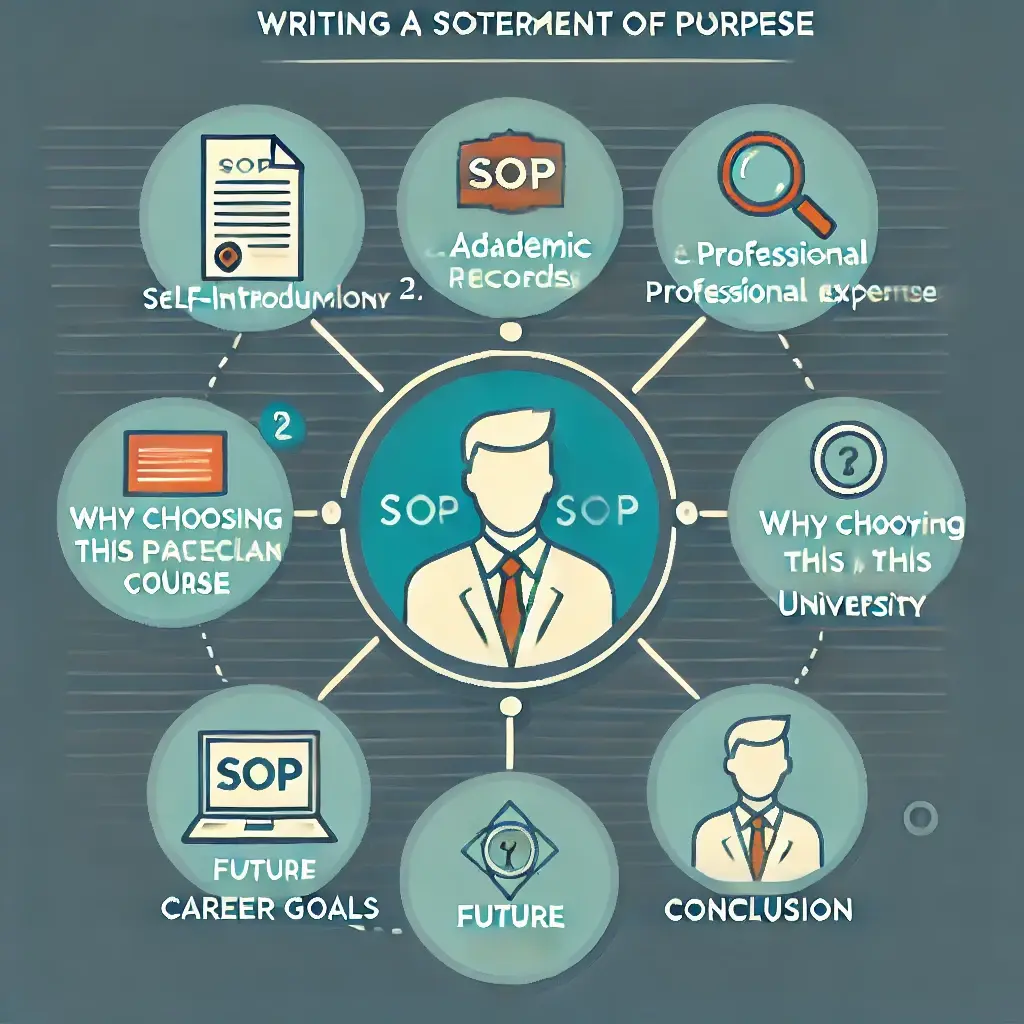
How to Write a Statement of Purpose (SOP): Step By Step
A Statement of Purpose (SOP) is crucial for your university or college application. First, to write an effective SOP, one must understand the course requirements and what the department expects. Then, check if the institution provides specific guidelines or examples on its website. Here’s a simple, straightforward structure:
Step 1: Introduction
Start with a brief introduction about yourself. Explain what interests you and why you’re drawn to this program. Make this section engaging and precise, as it sets the tone for your SOP.
Step 2: Academic Background
Describe your undergraduate and any graduate studies. Include important projects, research, and any papers or theses you’ve published. Mention your academic achievements clearly and professionally.
Step 3: Professional Experience
If you have work experience, detail your roles, duration, and key achievements. Explain how this experience has prepared you for the program and contributes to your career goals.
Step 4: Choice of Course
Explain why you chose this particular course. Discuss how it fits your career plans. Mention specific aspects of the program or faculty that attract you. Show that you’ve done your research and have a clear plan.
Step 5: Choice of Institution
Highlight why you’ve chosen this college or university. Discuss how you will contribute to the institution and mention any specific professors or resources that are appealing to you.
Step 6: Future Goals
Outline your short-term and long-term career goals. Be clear about your plans, whether it’s working in a top company or starting your own business. Focus on opportunities and your work ethic.
Step 7: Conclusion
End on a positive note. Show your enthusiasm and readiness to face challenges. Convey that you are a confident, passionate candidate eager to contribute and grow.
Why Statement of Purpose (SOP) and Personal Statement Important?
The Statement of Purpose (SOP) and Personal Statement are vital parts of your application when applying to universities or scholarship programs. Here’s why they matter:
Introduce Yourself as an Individual
These documents let you present yourself beyond grades and test scores. They highlight your personality, experiences, and what makes you stand out.
Show Your Fit for the Program
The SOP and Personal Statement allow the admissions committee to see if your goals and motivations align with the program. They help the university assess whether you’re a good match for their academic community.
Highlight Your Communication Skills
Good writing is crucial for university success. A well-written SOP or Personal Statement shows that you can communicate effectively. It also demonstrates your English proficiency if you’re applying to an English-medium university.
Address Weaknesses
If there are gaps or weaknesses in your academic profile, a strong SOP or Personal Statement can help you address them. You can explain challenges positively and focus on your future goals.
Influence Admission Decisions
These statements are often the most subjective part of your application. They can be a deciding factor in whether you’re admitted, especially if your grades are borderline.
Show Enthusiasm
Your SOP and Personal Statement give you a chance to express your passion for the field. Showing genuine interest can make you a more compelling candidate.
In short, these documents are your chance to connect personally with the admissions committee and stand out from other applicants.
Dos and Don’ts for Writing a Statement of Purpose (SOP) and Personal Statement
| Dos | Don’ts |
| Be clear and focused. Have a specific purpose and avoid vagueness. | Don’t be vague. Stay away from cliches and use precise language with real-world examples. |
| Tailor each application. Modify your SOP/Personal Statement to fit the specific requirements of each program or position. | Don’t use generic templates. Ensure your SOP/Personal Statement is unique and matches your distinct experiences and goals. |
| Showcase your motivation and passion. Explain your desire to pursue the field and describe the experiences that shaped your career decision. | Don’t include irrelevant details. Stay focused and refrain from unnecessary personal stories. |
| Highlight relevant experiences and achievements. Emphasize tasks, projects, and accomplishments directly related to your desired course or position. | Use simple language. Write in a simple straightforward manner that is easy for the admissions committee or employer to understand. |
| Demonstrate growth and self-awareness. Reflect on the benefits, drawbacks, and lessons you’ve learned through challenges. | Don’t make unfounded or exaggerated claims. Be honest and truthful in your SOP/Personal Statement. |
| Maintain a professional tone. Ensure your SOP/Personal Statement is professionally and formally written. Proofread for errors. | Pay attention to the instructions and word count. Follow the formatting guidelines and word count restrictions provided. |
| Start early and revise. Begin the writing process early and allocate sufficient time to develop ideas, write a draft, and revise it. | Don’t withhold or provide false information. Never omit relevant information or include false details in your SOP/Personal Statement. |
Proven Tips for Personal Statement / Statement of Purpose (SOP)
- Start early to avoid last-minute stress.
- Reflect on experiences and motivations to gather content.
- Outline your ideas clearly and logically.
- Begin with an engaging hook to capture attention.
- Highlight relevant academic and work experiences.
- Include extracurricular activities that show your skills.
- Clearly state your career goals and how the program fits.
- Show your passion for the subject and future plans.
- Research the university and tailor your statement to it.
- Get feedback from mentors or peers for improvement.
- Proofread to eliminate errors and ensure professionalism.
- Write in your own voice and avoid clichés.
- Follow the word limit and formatting guidelines.
- End with a strong conclusion that shows your enthusiasm.
Extra Tip: Revise your draft multiple times for clarity and improvement.
FAQs
Which one should I write when applying to universities?
When applying to universities, you’ll usually need to submit either a Personal Statement or an SOP. Most graduate programs, especially in the US, ask for an SOP. Some undergraduate programs, medical schools, and law schools may require a Personal Statement. Always update the specific requirements of the universities you’re applying to.
How long should a Personal Statement or SOP be?
The length varies by institution. A Personal Statement is typically 500-800 words or 1-2 pages. An SOP is usually longer, about 1,000 to 1,500 words or 2-3 pages. Always follow the word count or page limit provided.
What should I focus on in an SOP?
An SOP should focus on your academic and professional background. Highlight achievements, relevant coursework, research, and projects. Outline your career goals, how the program aligns with them, and what you can contribute to the academic community.
How should I structure a Personal Statement or SOP?
Both should have a clear introduction, body, and conclusion. Start with an engaging introduction. Use body paragraphs to support your main points with specific examples. End with a conclusion that reinforces your enthusiasm and fit for the program.
Should I mention my weaknesses in a Personal Statement or SOP?
If you have any gaps or weaknesses, mention them briefly and positively. Explain challenges you faced and how you overcame them. Focus more on your strengths, achievements, and future goals.
How can I make my Personal Statement or SOP stand out?
To stand out, be authentic, specific, and engaging. Use vivid examples to illustrate your points. Avoid clichés and generic statements. Proofread thoroughly to ensure your writing is clear, coherent, and error-free.
Final Advice
Writing a personal statement or statement of purpose (SOP) is a key part of your application. Following the guidelines and tips, you can craft a strong SOP highlighting your unique qualities and background. Be honest, passionate, and focused in your writing. This will help you stand out and improve your chances of getting into your desired university or winning a scholarship.